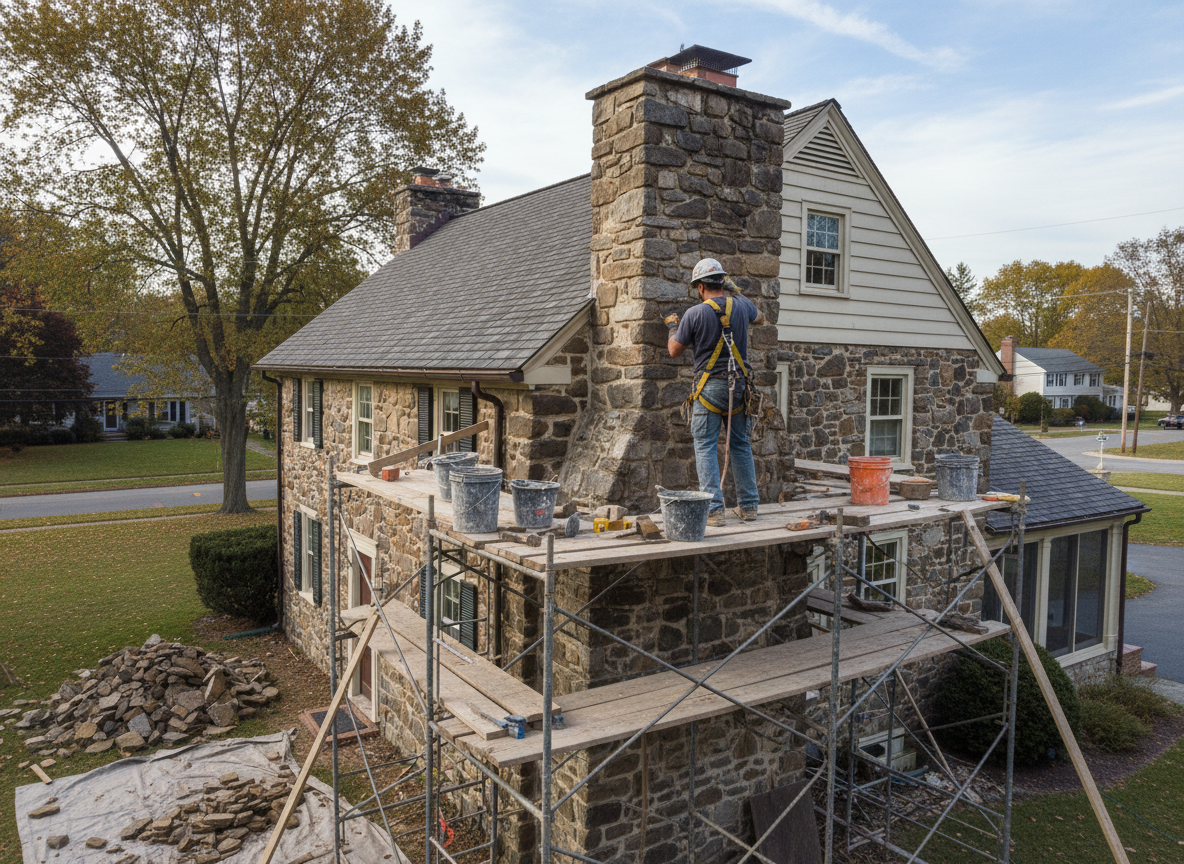
Stone chimneys on homes built in the 1960s through 1980s in neighborhoods like Lake Hiawatha and Lake Parsippany take a beating from repeated freeze-thaw cycles. Water enters hairline cracks in the stone or mortar joints, expands when temperatures drop below freezing overnight, and widens those openings by spring. Left alone, the damage lets water reach the flue liner and eventually the attic framing.
Repair work here usually starts with removing loose or spalled stone rather than simply pointing over it. We match the original fieldstone or cut stone where possible and use lime-based mortar that flexes with the temperature swings common along the Whippany River corridor. Metal flashing at the roofline is checked and reset because ice dams push water behind the stone in winter.
Homeowners often discover the issue when staining appears on interior walls near the fireplace after heavy spring rain. At that point the crown and cap must be examined too, since cracked caps allow water straight down the flue. We always pull the rain cap and inspect the flue tile condition before closing up the job.
Technician insight
In Parsippany-Troy Hills, the thing that catches most people out with stone chimney repair is how north-facing chimneys on pre-1980 homes stay shaded all winter and never dry out between freeze cycles, so the mortar keeps crumbling from the inside even when the south side looks fine.
Stone Separation on Lake Hiawatha Chimney
Water stains showed up on the second-floor ceiling after a March thaw. Inspection found open mortar joints on the north face and a cracked cap. We removed loose stone, repointed with lime mortar, replaced the cap, and reset the flashing. No further water entry was reported the following winter.
How it works
- 1
On-Site Assessment
We examine every side of the chimney, probe mortar joints, and check for water entry points at the roof intersection.
- 2
Loose Stone and Mortar Removal
Damaged stone and deteriorated mortar are cut out without disturbing sound sections of the original stonework.
- 3
Rebuild and Repoint
New stone is set in lime-based mortar matched to the existing color and texture, then tooled for proper water shedding.
- 4
Cap and Flashing Check
The chimney cap is repaired or replaced and step flashing is reset to prevent water from entering behind the stone.
Pricing
Cost depends on height, extent of stone replacement, and whether the roofline must be opened. Upfront quotes are provided after inspection.