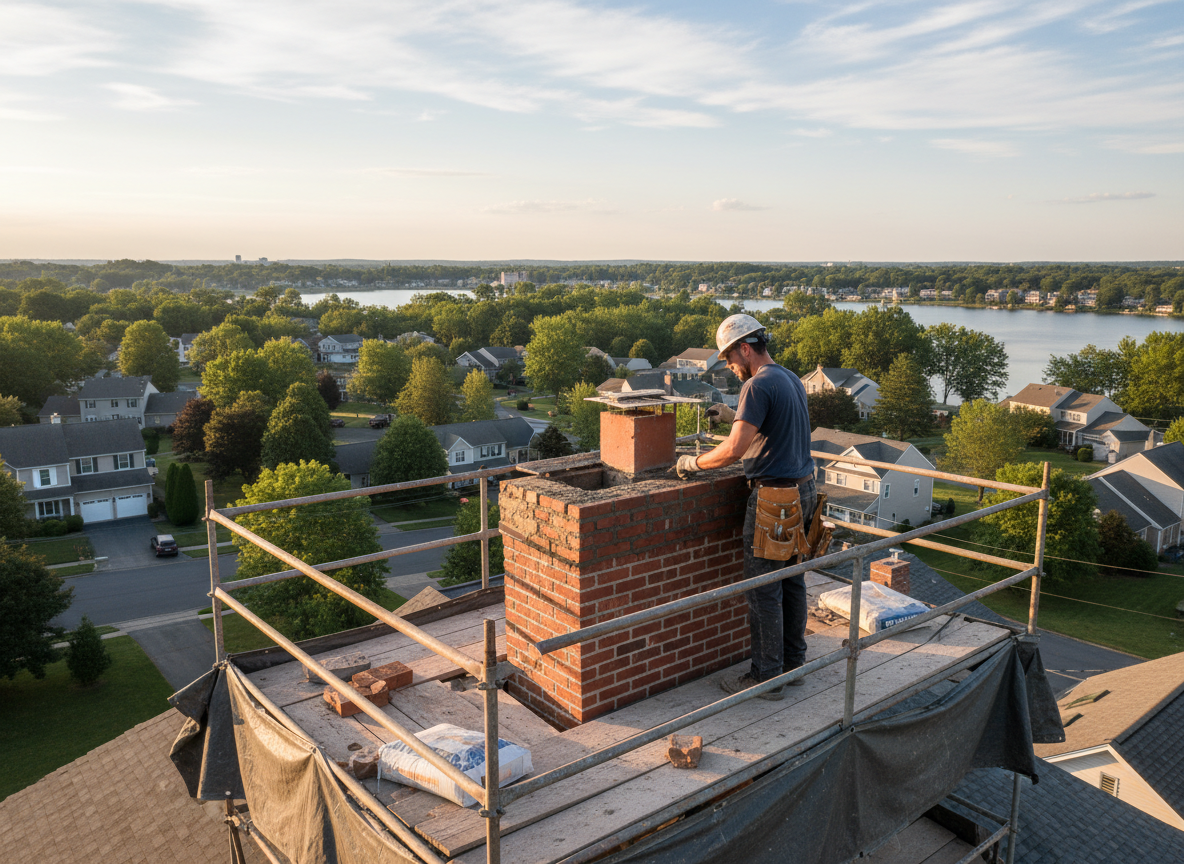
Parsippany-Troy Hills homes built in the 1960s through 1980s often feature masonry chimneys tied into split-level and ranch layouts. Freeze-thaw cycles through Morris County winters push water behind the crown and through failed mortar joints, leading to spalling brick and water tracking down the flue into living spaces. Homeowners searching chimney repair near me frequently discover these issues only after heavy rain or when ice dams form along the roofline.
Flashing integration around the chimney base is a common failure point on homes near Lake Parsippany and in the Waterview area because original step flashing was never updated when roofs were replaced. We check the counter flashing seal, crown condition, and liner integrity on every call because a single missed joint can allow carbon monoxide to migrate into attics. Older clay liners in these neighborhoods also crack from repeated heating and cooling, requiring targeted repair rather than full rebuilds when the damage stays localized.
Terrain around the Rockaway River corridor adds another layer: runoff from higher lots saturates chimney bases on the downhill side of streets like Beverwyck and Hiawatha. This accelerates deterioration of the concrete pad and lower courses of brick that sit below grade. Addressing the water source before masonry work prevents repeat failures that standard tuckpointing alone cannot solve.
Technician insight
In Parsippany-Troy Hills, the thing that catches most people out with chimney repair near me is water entering behind the flashing on the downhill side of the chimney where the lot slopes toward the Rockaway River corridor. Split-level homes from the 1970s here sit with the chimney base partially below grade on one side, so simply repointing the visible brick never stops the leak until the grade and flashing are corrected together.
Ice Dam Leak on Beverwyck Road
Water was staining the ceiling below the chimney after every thaw. We found failed step flashing and cracked crown on a 1978 split-level. The lower courses of brick had absorbed moisture from poor drainage on the downslope side. We replaced the flashing, rebuilt the crown, and regraded the soil away from the base. No further staining occurred through the next winter.
How it works
- 1
On-Site Assessment
We arrive at the Parsippany-Troy Hills address, inspect from roof to firebox, and document water entry points, liner condition, and flashing details.
- 2
Diagnosis and Scope
Findings are explained on site with photos so the homeowner understands which repairs address the actual source rather than cosmetic symptoms.
- 3
Repair Execution
Mortar, flashing, crown, or liner work is completed using materials matched to the existing chimney construction common in the neighborhood.
- 4
Final Verification
A smoke test and visual check confirm draft restoration and water tightness before we leave the property.
Pricing
Upfront quotes provided after inspection; pricing varies with access, extent of masonry damage, and whether liner work is required.