Parsippany-Troy Hills homes built from the 1960s through the 1990s often feature chimneys constructed with common brick and standard Portland mortar that does not hold up well to repeated freeze-thaw cycles. Winter temperatures swing above and below freezing several times each month, forcing moisture trapped in the masonry to expand and contract. Over time this opens hairline cracks along the flue and crown, allowing water to reach the wood framing where it can cause rot. Homeowners in neighborhoods like Lake Hiawatha and the areas near Route 46 frequently discover these issues only after interior ceiling stains appear during spring thaws.
Effective chimney masonry repair here requires removing loose or spalled bricks, cutting out deteriorated mortar to a minimum half-inch depth, and repointing with a Type N or Type O lime-based mix matched to the original joint width. Simply applying a surface patch fails within two seasons because it traps moisture behind the repair. Technicians also check the flashing where the chimney meets the roof deck, because wind-driven rain common in this part of Morris County pushes water under standard step flashing on homes with steeper pitches.
Structural concerns arise when cracks extend through multiple courses or when the chimney leans due to foundation settlement on the clay-heavy soils found along the Whippany River corridor. In these cases the repair may involve rebuilding the upper third of the stack or installing a stainless-steel liner before the masonry work begins. Local code requires any work above the roofline to maintain proper clearances to combustible materials, and inspectors in Parsippany-Troy Hills check for this on permits pulled for chimney projects.
Technician insight
In Parsippany-Troy Hills, the thing that catches most people out with chimney masonry repair is how quickly the freeze-thaw cycles along the Whippany River corridor destroy standard mortar in chimneys on 1970s split-levels; homeowners often try caulk or surface patches that trap moisture and make the next repair larger.
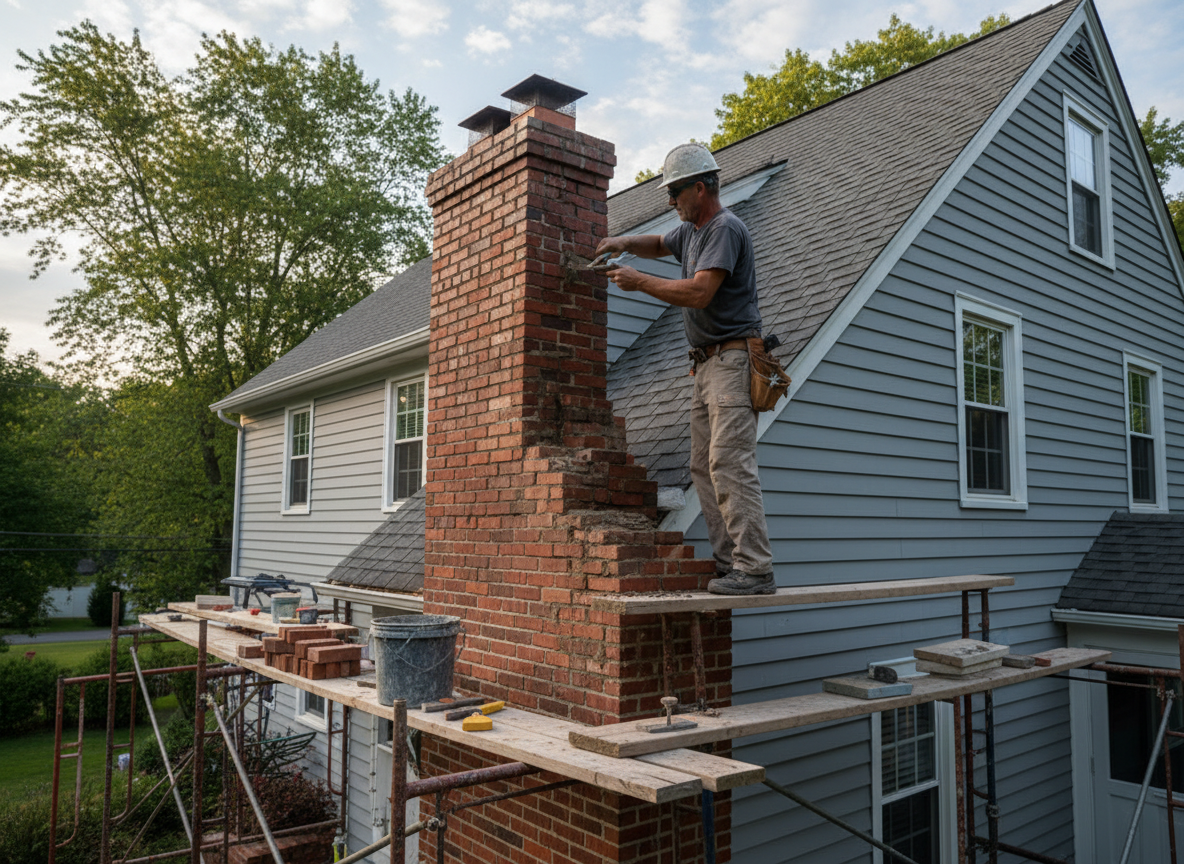
Leaning Chimney on Lake Hiawatha Home
A homeowner noticed interior water stains after a heavy March rain. Inspection revealed cracked mortar and a slight lean on the south side of the stack caused by repeated freeze-thaw damage and minor foundation movement. The upper four courses were dismantled, the flue was lined, and the stack was rebuilt plumb with new mortar matched to the original joint profile. The roof flashing was also renewed to prevent further water entry.
How it works
- 1
Site Inspection
Technician climbs the roof and examines the full chimney stack, crown, and flashing for visible damage and water entry points.
- 2
Damage Assessment
Mortar joints are probed and bricks are tested for soundness; photos and notes document extent of cracking and water intrusion.
- 3
Masonry Repair
Damaged bricks and mortar are removed, new materials installed, and the crown is rebuilt or sealed as needed.
- 4
Final Check and Cleanup
Repairs are inspected from ground and roof level, debris removed, and the homeowner shown the completed work.
Pricing
Pricing depends on the height of the chimney, number of courses requiring rebuild, and whether a liner is needed; upfront quotes given after inspection.