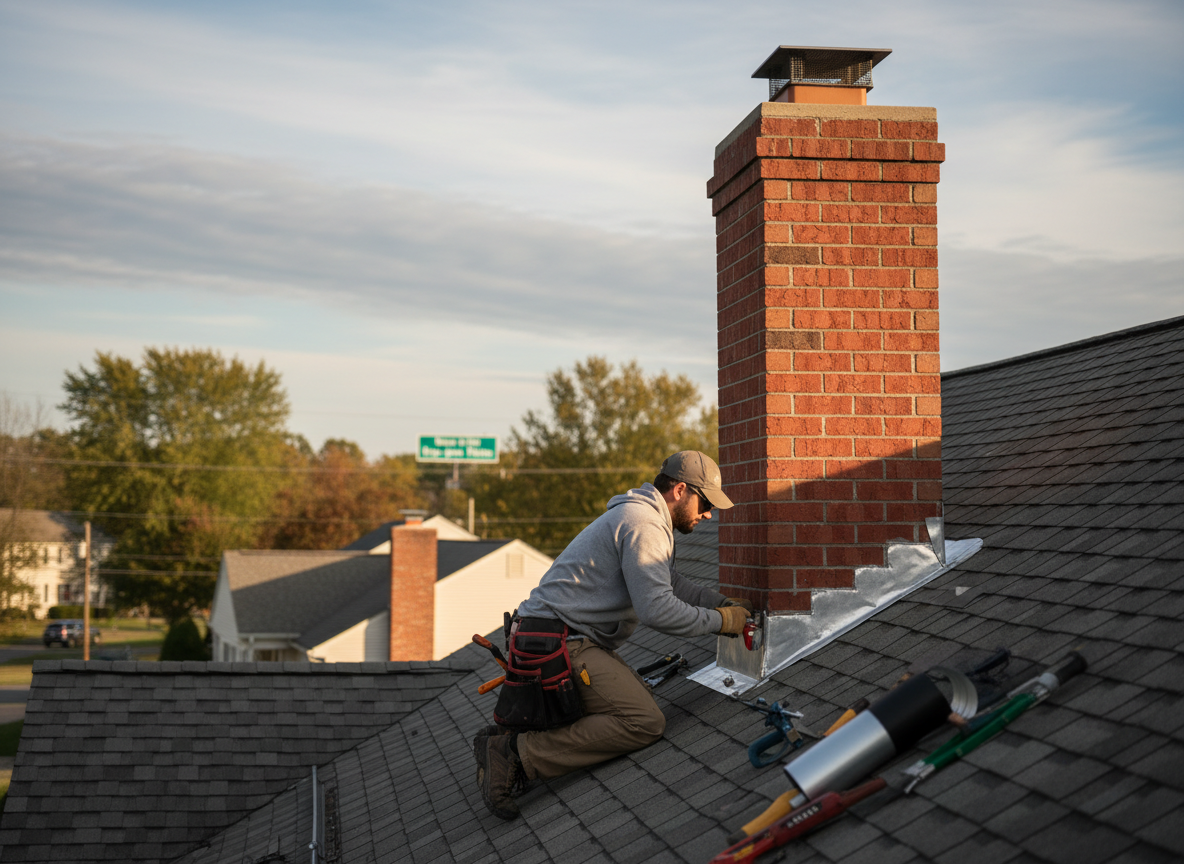
Troy Hills sits in the eastern section of Parsippany-Troy Hills with many split-level and colonial homes built from the late 1950s through the 1970s. These houses typically feature masonry chimneys that have seen decades of freeze-thaw cycles, heavy snow loads, and occasional ice dams along the roofline. Revivon Works, based at 35 Waterview Blvd, reaches Troy Hills homes quickly via Route 46 or local streets such as Smith Road and Beverwyck Road. Crews inspect for cracked flue tiles, spalling brick, and crown damage that shows up after a hard winter.
Access to many Troy Hills properties involves narrow driveways and mature trees that limit ladder placement. Technicians often work from the rear yard or use extension ladders set on the street side when lots slope toward the back. The area sits near the Troy Meadows wetlands, so morning fog and higher humidity can keep chimneys damp longer, increasing creosote buildup in wood-burning flues. Revivon Works schedules most Troy Hills jobs in the shoulder seasons before the first hard freeze sets in.
Homeowners along streets like Allentown Road and Troy Hills Road frequently report water intrusion at the flashing where the chimney meets the roof. Standard repairs here include installing new stainless-steel liners sized for the existing fireplace or furnace, rebuilding crowns with proper slope, and sealing joints with high-temperature caulk rated for New Jersey winters.
Around Troy Hills
We regularly work near:
- 📍Troy Hills Elementary School
- 📍Smith Road Park
- 📍Beverwyck Road
- 📍Troy Meadows Nature Preserve
- 📍Route 46 eastbound ramp
- 📍Waterview Corporate Center
Chimney Repair in Troy Hills — Local Notes
- •Troy Hills homes from the 1960s often have single-wall clay flues that crack when temperatures swing from 20 degrees to 50 degrees in a single day.
- •Narrow driveways off Beverwyck Road require shorter service trucks and hand-carrying of materials across lawns during wet spring conditions.
- •Proximity to Troy Meadows means higher ground moisture that accelerates mortar deterioration on north-facing chimneys.
- •Ice dam formation along the front roof edge is common on east-west oriented streets, pushing water behind the chimney flashing.