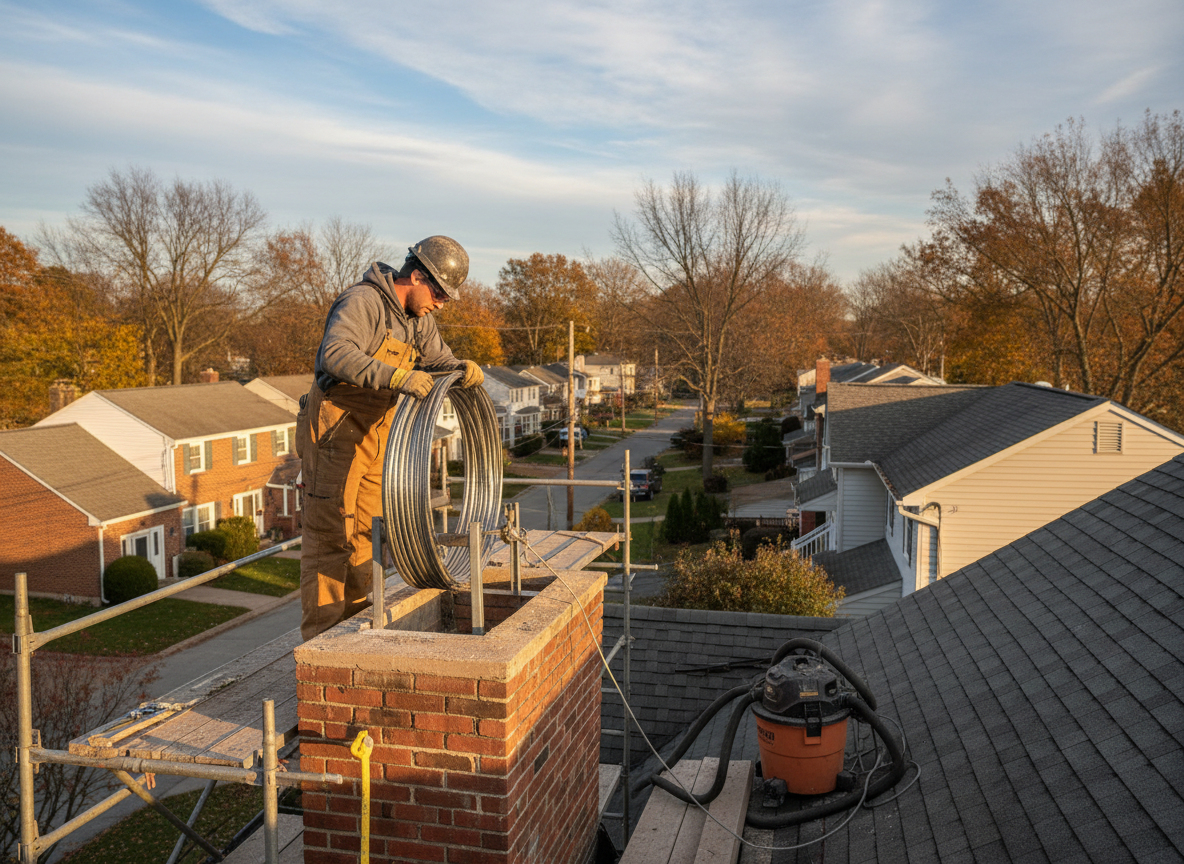
Parsippany-Troy Hills contains many split-level and two-story homes built between 1960 and 1985 whose chimneys were originally constructed with clay tiles that have since cracked from repeated freeze-thaw cycles common in Morris County winters. Water enters these fissures, freezes, and widens the gaps, allowing smoke and creosote to migrate into living spaces. Relining with a stainless-steel or cast-in-place system seals the flue while preserving the original masonry exterior and meeting current International Residential Code requirements for clearance and insulation.
We select liners based on fuel type and chimney height typical in the area. Gas appliances often need a 6-inch or 8-inch insulated liner to maintain draft against wind exposure on the Watchung Ridge slopes, while wood-burning units require heavier-gauge material to handle higher temperatures. Installation involves removing debris, verifying the flue is straight, and terminating the liner above the crown with a proper rain cap. Homeowners in neighborhoods near Lake Parsippany frequently request this service after noticing white efflorescence on interior walls during spring thaws.
Attempting to patch cracks with mortar alone fails once the next freeze arrives, and unlined chimneys can violate insurance requirements after a claim. We always perform a level-2 video inspection first to confirm the liner will fit without offsets that trap creosote. Proper relining also improves efficiency by reducing heat loss through the stack, an important factor for homes heated with oil or gas during long New Jersey winters.
Technician insight
In Parsippany-Troy Hills, the thing that catches most people out with chimney relining is the way older split-level homes on sloped lots have flues that angle out of plumb after decades of soil settlement; that offset traps creosote and makes a standard liner bind unless we reroute or use a flexible section sized for the actual run.
Relining After Water Stains Appeared
Homeowner in central Parsippany noticed water marks on the family-room ceiling below the chimney during spring thaw. Inspection revealed cracked clay tiles and missing mortar joints allowing meltwater to enter. We installed a 6-inch insulated stainless liner through the existing flue and rebuilt the crown. Draft improved and no further moisture appeared after the next freeze cycle.
How it works
- 1
Initial Video Inspection
We scope the full flue length from the firebox to the crown to locate cracks, offsets, and creosote buildup.
- 2
Flue Preparation
Loose debris and damaged tile sections are removed so the new liner can seat fully without obstruction.
- 3
Liner Installation
A stainless-steel or cast-in-place liner sized for the appliance is inserted and insulated according to manufacturer specifications.
- 4
Termination and Testing
The liner is capped, connected to the appliance, and smoke-tested to confirm proper draft and seal.
Pricing
Pricing varies by chimney height, liner diameter, and whether insulation or crown repair is needed; we provide an upfront written quote after inspection.