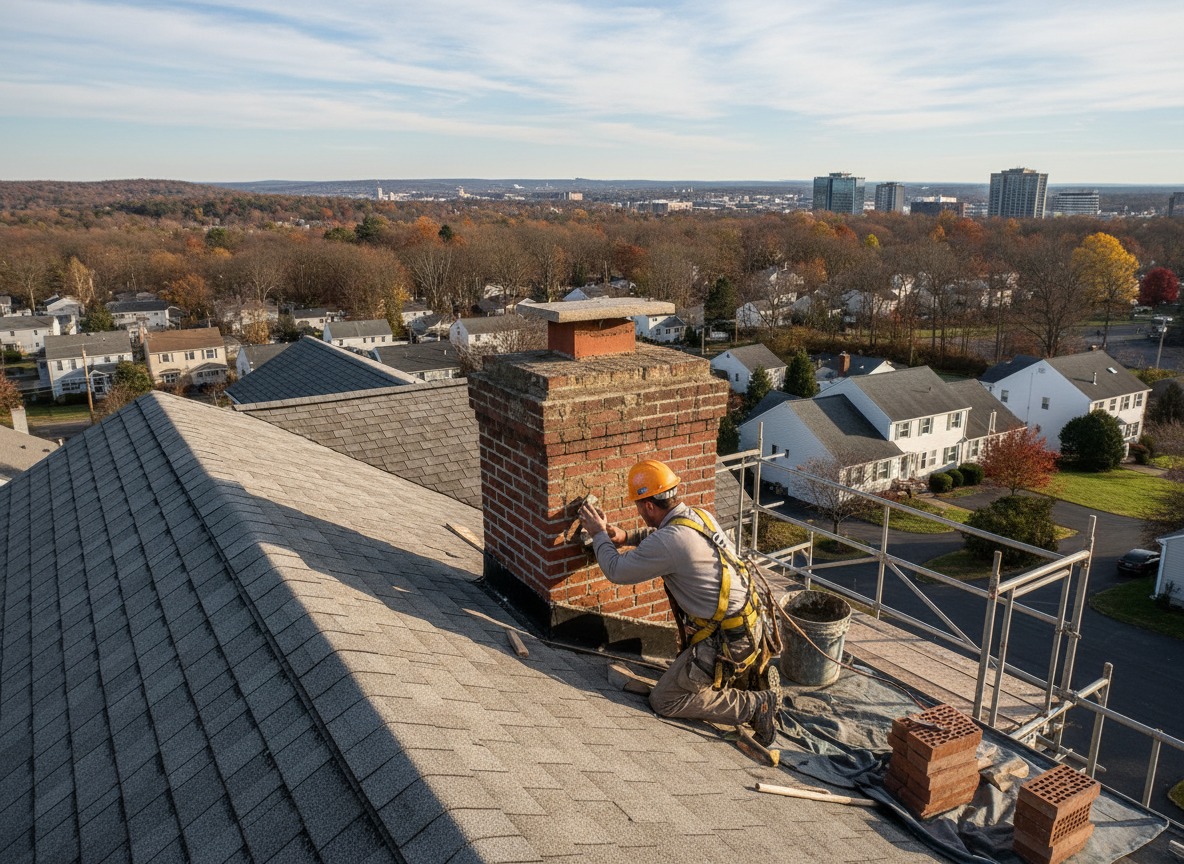
Roof chimney repair in Parsippany-Troy Hills often centers on the intersection where masonry meets asphalt shingles or slate. Winter freeze-thaw cycles in Morris County push water behind failed step flashing, rotting sheathing and creating interior stains that homeowners notice only after heavy spring rains. Older split-levels and colonials along routes like Route 46 and Beverwyck Road commonly have original chimneys with single wythe construction that offers little protection once the crown cracks.
Proper repair requires removing loose bricks, installing new counter flashing that tucks under the roof membrane, and rebuilding the cricket if the chimney sits mid-slope. Access on these properties is frequently limited by mature trees and narrow driveways, so crews must stage materials carefully to avoid damaging established landscaping. Skipping proper underlayment or using caulk instead of metal flashing leads to repeat leaks within two seasons.
Seasonal Considerations
Parsippany-Troy Hills receives measurable snowfall most winters that piles against the chimney base and melts slowly. Homeowners who wait until interior water appears often discover deteriorated rafters that extend the scope beyond simple flashing replacement.
Materials and Edge Cases
We match existing brick or stone when rebuilding the top courses and use lead-coated copper flashing on homes with slate roofs to maintain appearance and longevity. In neighborhoods with steep grades near Lake Parsippany, drainage around the foundation must be checked because poor runoff can undermine the chimney footing over time.
Technician insight
In Parsippany-Troy Hills, the thing that catches most people out with roof chimney repair is how quickly water gets behind the flashing on 1960s and 1970s split-levels once the original lead step flashing cracks. Homeowners often think a quick caulk job will hold through another winter, but the freeze-thaw along Waterview Boulevard and surrounding streets pushes moisture into the attic before they notice.
Mid-slope chimney leak on a Beverwyck Road colonial
Water stains appeared on the second-floor ceiling after a March thaw. Inspection revealed deteriorated step flashing and rotted sheathing where the chimney penetrated the roof. We removed the old flashing, rebuilt the top two courses of brick, installed new copper counter flashing, and restored the roof membrane. No further leaks occurred the following winter.
How it works
- 1
Initial Inspection
Technician climbs to roof level to assess flashing condition, crown integrity, and water intrusion points from Parsippany-Troy Hills homes.
- 2
Scope and Quote
Detailed findings shared on site with photos and material recommendations before any work begins.
- 3
Repair Execution
Remove damaged flashing and masonry, install new step and counter flashing, rebuild crown as needed, and restore roof membrane.
- 4
Final Check
Water test performed and interior attic inspected for remaining moisture before cleanup.
Pricing
Pricing varies by roof pitch, chimney height, and extent of rotted sheathing; upfront quotes provided after inspection.