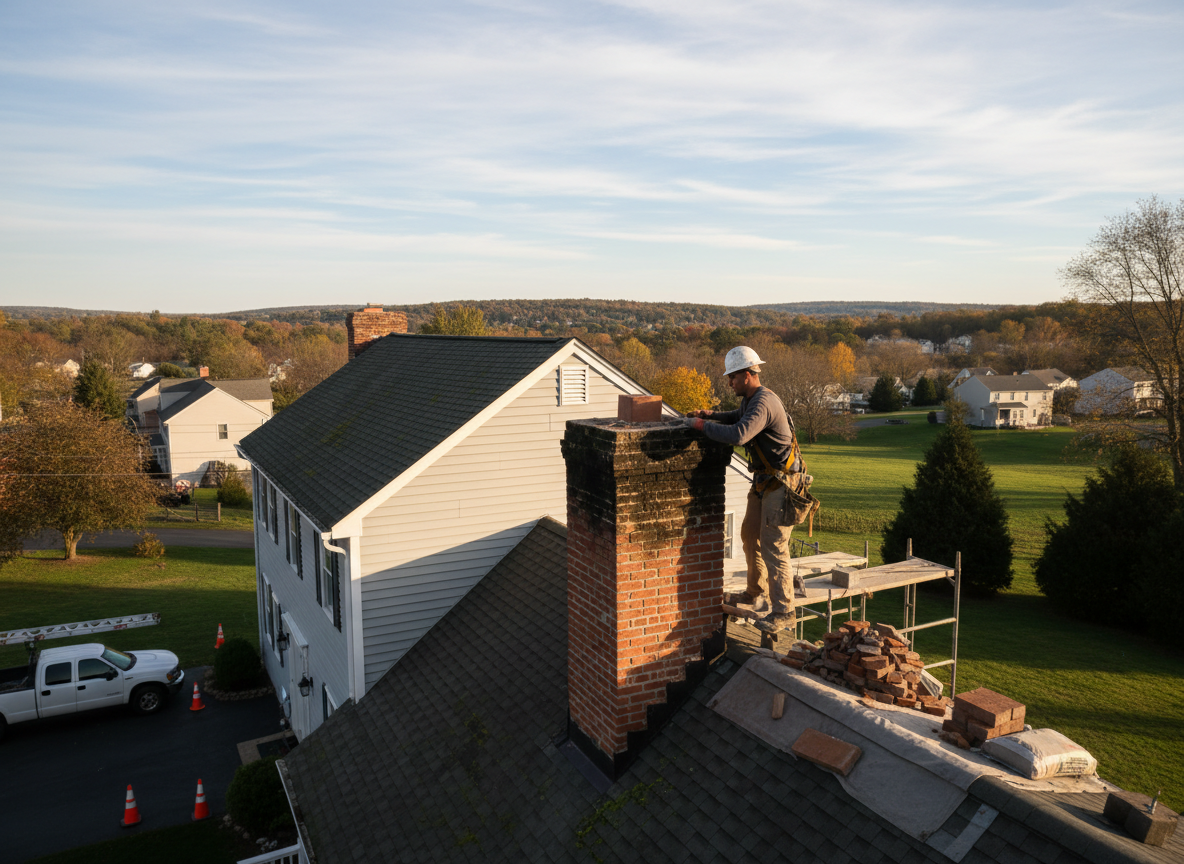
Residential chimney repair in Parsippany-Troy Hills often centers on damage from repeated freeze-thaw cycles that crack older brick and mortar joints. Homes built before the 1980s in neighborhoods like Lake Hiawatha and the Powder Mill area commonly show spalling at the crown or separation where the chimney meets the roofline. We assess flue tile condition, check for water intrusion behind the brick, and evaluate whether a stainless liner or full tuckpointing will restore draft and safety without full rebuild.
Morris County soil movement and heavy snow loads add stress to foundations supporting chimneys on sloped lots near Waterview and Route 46. Homeowners frequently overlook interior flue gaps that allow carbon monoxide to migrate into living spaces during shoulder seasons. Proper repair requires matching original brick where possible, installing code-compliant flashing, and ensuring the chimney cap prevents further water entry during spring thaws.
Winter Damage Patterns
Freeze-thaw action in Parsippany-Troy Hills accelerates mortar deterioration faster than in milder parts of the state. We see most calls after January when ice expansion loosens crown masonry and opens gaps around the flue. Early inspection prevents small cracks from requiring complete chimney reconstruction later in the season.
Common Repair Materials
For local brick chimneys we use Type N mortar to match existing flexibility and avoid future cracking. Stainless steel liners are installed when clay tiles are fractured, restoring safe operation while meeting current Morris County venting requirements.
Technician insight
In Parsippany-Troy Hills, the thing that catches most people out with residential chimney repair is how quickly January freeze-thaw cycles open crown cracks on 1970s brick homes near Lake Parsippany, letting water reach the attic before owners notice.
Lake Hiawatha Brick Separation
A homeowner noticed water stains on the second-floor ceiling after a January thaw. We found the chimney crown had cracked and flashing had pulled away on the north side. We rebuilt the crown, replaced the flashing, and installed a stainless liner to seal the flue. The attic stayed dry through the rest of the winter.
How it works
- 1
On-Site Assessment
We arrive within hours, inspect from crown to cleanout, and document all visible and hidden damage using camera and moisture meter.
- 2
Scope and Quote
Findings are explained on site with photos; an itemized repair plan and timeline are provided before any work begins.
- 3
Targeted Repair
Masonry restoration, liner installation, or crown rebuilding is completed using materials suited to Parsippany-Troy Hills freeze-thaw exposure.
- 4
Final Verification
Draft test and visual inspection confirm the chimney meets safety standards before we leave the property.
Pricing
Cost depends on damage extent, liner needs, and access; we provide a written upfront quote after inspection.