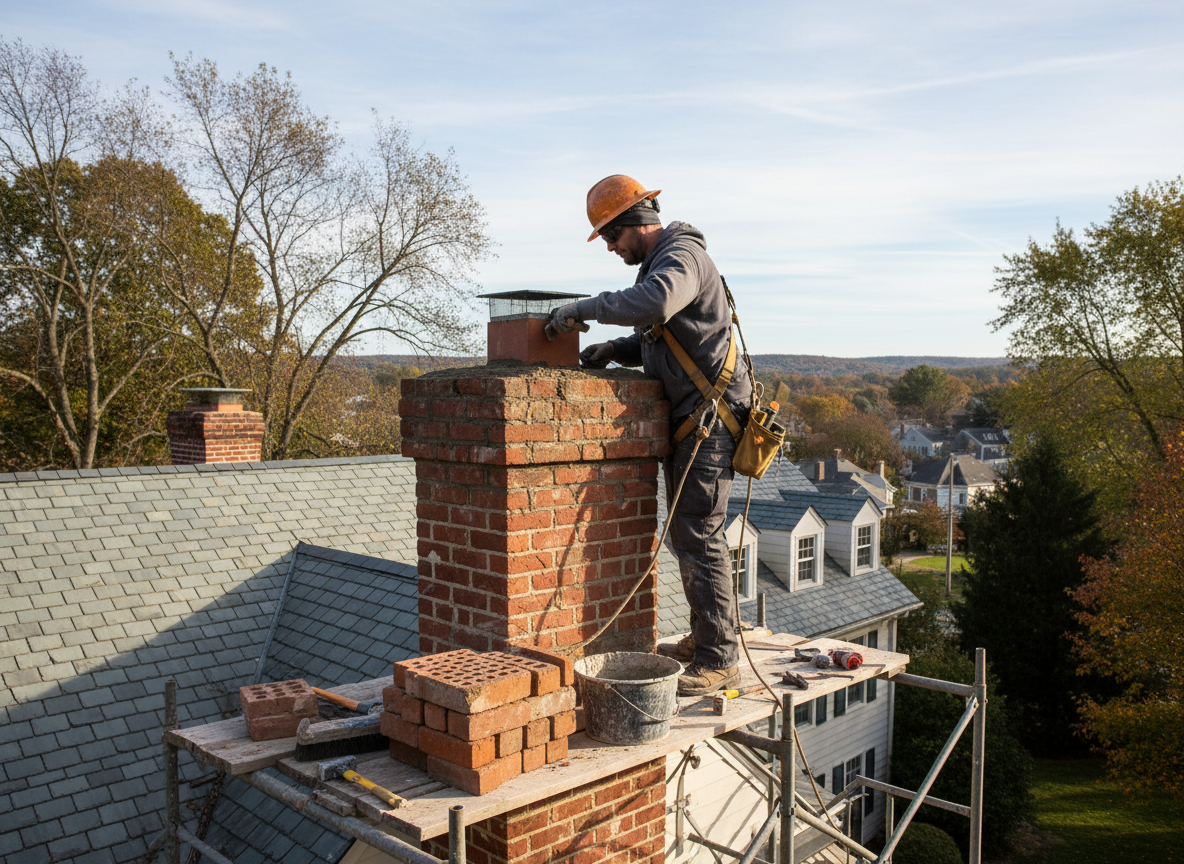
Homes in Parsippany-Troy Hills often feature masonry chimneys built decades ago that face repeated freeze-thaw stress from New Jersey winters. Water enters through hairline cracks in flue tiles or crown mortar, then expands when temperatures drop, widening gaps and allowing soot and creosote to escape into attics. Technicians at Revivon Works trace these paths from the roofline down to the smoke chamber, checking for separation where the chimney meets the roof deck in neighborhoods like Lake Hiawatha and Mount Tabor.
Repair work here frequently involves tuckpointing with type N mortar matched to existing brick, installing stainless steel chimney caps rated for local wind loads, and rebuilding damaged crowns with reinforced concrete mixes that resist salt air from the nearby coast. Edge cases include chimneys that lean after decades of soil settlement along the Whippany River corridor and flue liners that have spalled from acidic condensation in gas-converted fireplaces common in 1960s ranch homes.
Morris County building codes require permits for structural chimney work and proper flashing integration with asphalt shingles typical on local roofs. Skipping these steps can lead to insurance denials after leaks. Revivon Works always pulls permits when needed and leaves the work site clean so homeowners can inspect the mortar joints and cap fit before final payment.
Technician insight
In Parsippany-Troy Hills, the thing that catches most people out with professional chimney repair is how quickly water gets behind the flashing on split-level homes built on sloped lots near Waterview Boulevard. The roofline intersection often settles unevenly, so a simple crown patch fails within two winters unless the flashing is lifted and resealed at the same time.
Cracked Crown on 1970s Split-Level
Water stains appeared on the second-floor ceiling after a heavy March rain. Inspection revealed a deteriorated crown and open mortar joints on the east face of the chimney. The crew rebuilt the crown with a reinforced mix, repointed the exposed joints, and resealed the step flashing. No further staining occurred through the following winter.
How it works
- 1
Initial Inspection
Technician climbs to the roof and examines crown, flue, and flashing while checking interior firebox and smoke chamber for soot patterns.
- 2
Diagnosis and Quote
Findings are documented with photos and explained on site, including which materials will match the existing chimney construction.
- 3
Repair Execution
Masonry repairs, liner work, or cap replacement are completed with weather-appropriate mortar and sealants rated for northern New Jersey conditions.
- 4
Final Walkthrough
Homeowner inspects completed work from both roof and interior; any remaining questions are answered before departure.
Pricing
Pricing depends on chimney height, extent of masonry damage, and whether a new liner or crown rebuild is required; upfront quotes provided after inspection.