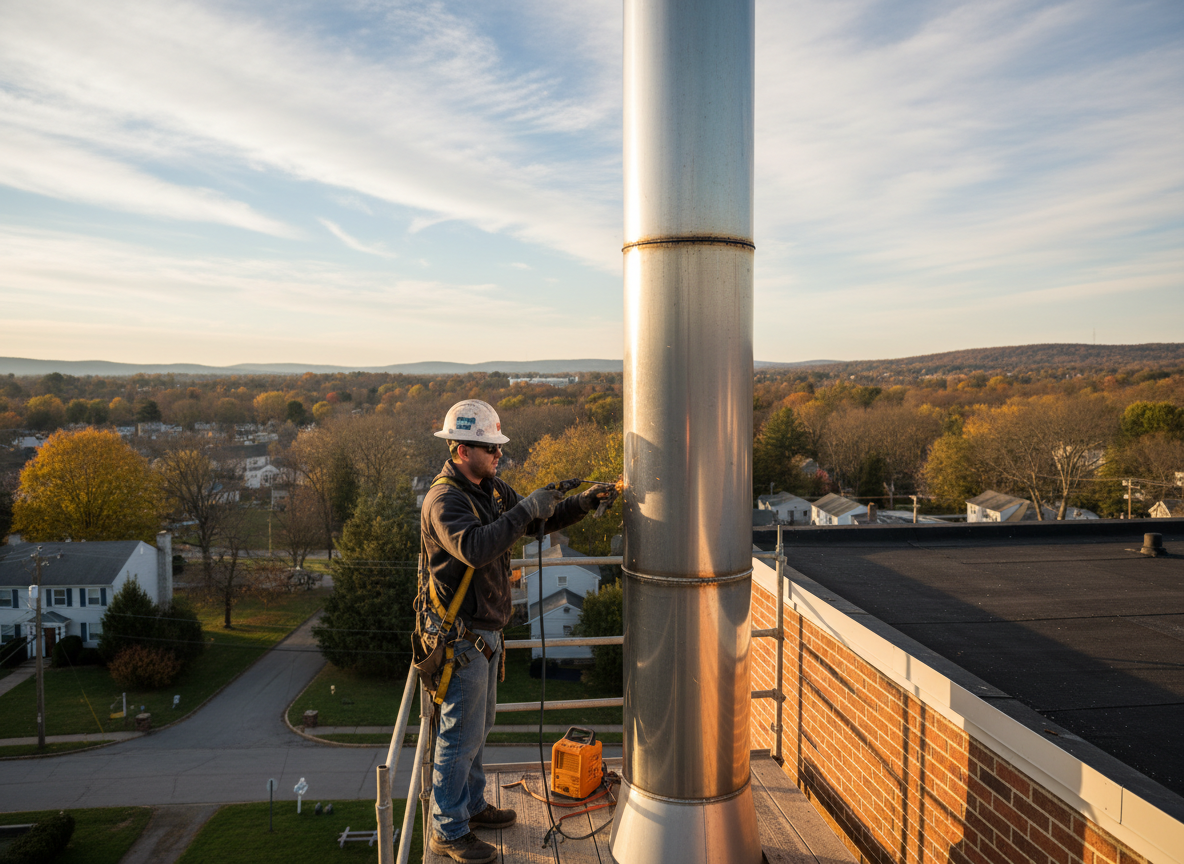
Metal chimneys in Parsippany-Troy Hills homes often show rust along seams and at the roof line after years of exposure to freeze-thaw cycles and road salt carried on winter winds. Revivon Works techs start by checking the outer casing, inner flue, and rain cap for pinholes or separated joints that allow water to reach wood framing. In split-level and ranch houses common near Waterview Blvd, the chase is frequently tight, so we remove only the damaged sections rather than the full stack when corrosion is localized.
Edge cases include chimneys that vent oil furnaces or wood stoves where creosote mixes with moisture and speeds pitting. We carry stainless steel patches and high-temp sealant rated for the temperature swings typical here. Before any weld or rivet work we verify the flue still meets current clearance rules to nearby combustibles, especially in older capes where insulation has settled.
Homeowners sometimes mistake surface rust for a full replacement job. We scrape, treat, and coat first, then monitor the repaired area through one heating season. This approach keeps most metal chimney repairs in Parsippany-Troy Hills under the cost of a new prefab unit while restoring safe draft.
Winter Prep for Metal Chimneys
Before temperatures drop, check the cap and flashing on metal chimneys serving homes built in the 1960s through 1980s around Parsippany-Troy Hills. Loose flashing lets meltwater run down the chase and rot top plates. Revivon Works can install new storm collars and seal the joints in one visit so the first heavy snow does not turn into an interior leak.
Technician insight
In Parsippany-Troy Hills the thing that catches most people out with metal chimney repair is how quickly road salt and winter meltwater reach the seams on chimneys serving split-level homes built near Waterview Blvd; the chase is narrow so one small leak rots the top plate before anyone notices.
Corroded Metal Flue on Troy Hills Split-Level
Homeowner saw brown streaks on the family-room ceiling after a January thaw. We found pinholes at the joint where the metal flue passed through the roof deck. The damaged three-foot section was replaced with matching stainless, seams sealed, and the cap reset. No further water entry occurred through the rest of the winter.
How it works
- 1
Site Assessment
We examine the full length of the metal chimney from basement to cap, noting rust locations, joint gaps, and any water staining on interior walls.
- 2
Material Selection
Matching gauge and alloy prevents future galvanic corrosion; we carry 304 and 316 stainless sections sized for local furnace and fireplace flues.
- 3
Section Repair or Replacement
Damaged pieces are cut out and new sleeves or full lengths are fitted with rivets and high-temperature sealant rated for Parsippany winters.
- 4
Leak Test and Cleanup
A water test confirms the repair, then the work area is cleared and the homeowner receives photos of the completed sections.
Pricing
Pricing depends on chimney height, extent of corrosion, and whether a full liner replacement is needed; upfront quote after inspection.