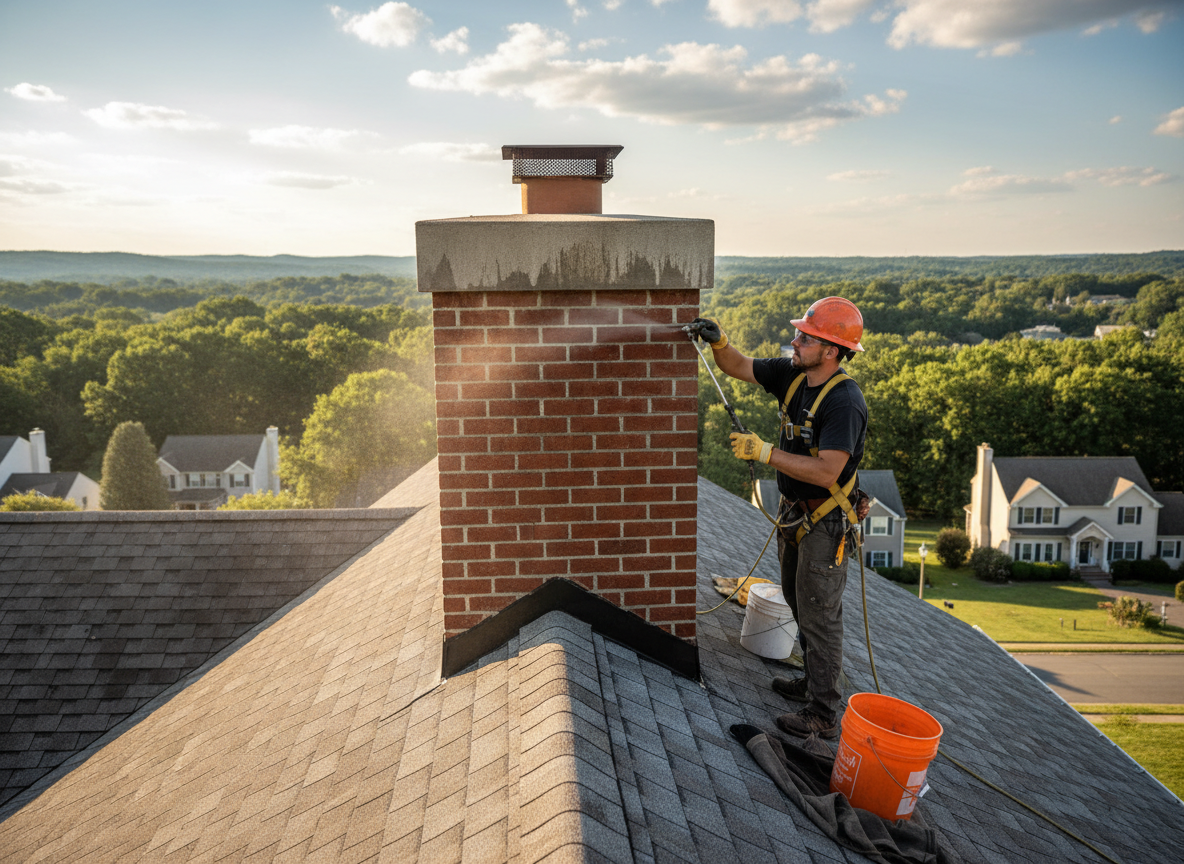
Chimney waterproofing in Parsippany-Troy Hills starts with cleaning the masonry and applying a breathable silane-siloxane sealer that penetrates brick and mortar without trapping moisture. Homes built before 1980 in neighborhoods like Lake Hiawatha and Cedar Knolls often have single-wythe brick stacks that absorb water during spring thaws, leading to spalling and flue liner damage if left untreated.
Flashing integration matters here because many chimneys sit at roof valleys where ice dams form in winter. We tuck new step flashing under existing shingles and seal the crown with a flexible elastomeric coating rated for -20°F temperatures common in the area. Skipping the crown leaves water running straight down the flue, rusting dampers and damaging the smoke chamber.
DIY sprays from big-box stores fail quickly on the high-alkali mortar used in local 1960s and 1970s construction. Professional application requires surface temperatures above 45°F and two thin coats with a 24-hour cure between them to avoid white blooming on the exterior.
We always check for active creosote buildup and cracked flue tiles before sealing, since waterproofing over those issues can hide problems until a chimney fire or carbon monoxide leak occurs.
Technician insight
In Parsippany-Troy Hills, the thing that catches most people out with chimney waterproofing is how the clay-heavy soil around older split-levels on the east side of Route 46 holds water against the foundation, pushing moisture up into the base of the chimney even after the stack itself is sealed.
Cedar Knolls Split-Level Leak
Homeowner reported water stains on the second-floor ceiling near the chimney during spring rains. Inspection showed open mortar joints and a cracked crown on a 1972 brick stack. We repointed, applied silane-siloxane sealer, and recoated the crown. No further leaks appeared after the next heavy rain.
How it works
- 1
Site Assessment
We inspect the crown, flue, flashing, and surrounding roof from 35 Waterview Blvd base out to Parsippany-Troy Hills job sites, noting water stains and mortar condition.
- 2
Surface Preparation
Pressure washing removes loose debris and efflorescence, followed by repointing any open joints with type N mortar matched to existing work.
- 3
Sealer Application
Two coats of silane-siloxane sealer are applied by brush and roller to the crown, exterior brick, and any exposed flue tile.
- 4
Flashing And Crown Detail
New lead step flashing is installed where needed and the crown receives elastomeric coating to direct water away from the flue.
Pricing
Cost depends on chimney height, number of sides exposed, and whether flashing work is required. Upfront quotes given on site.