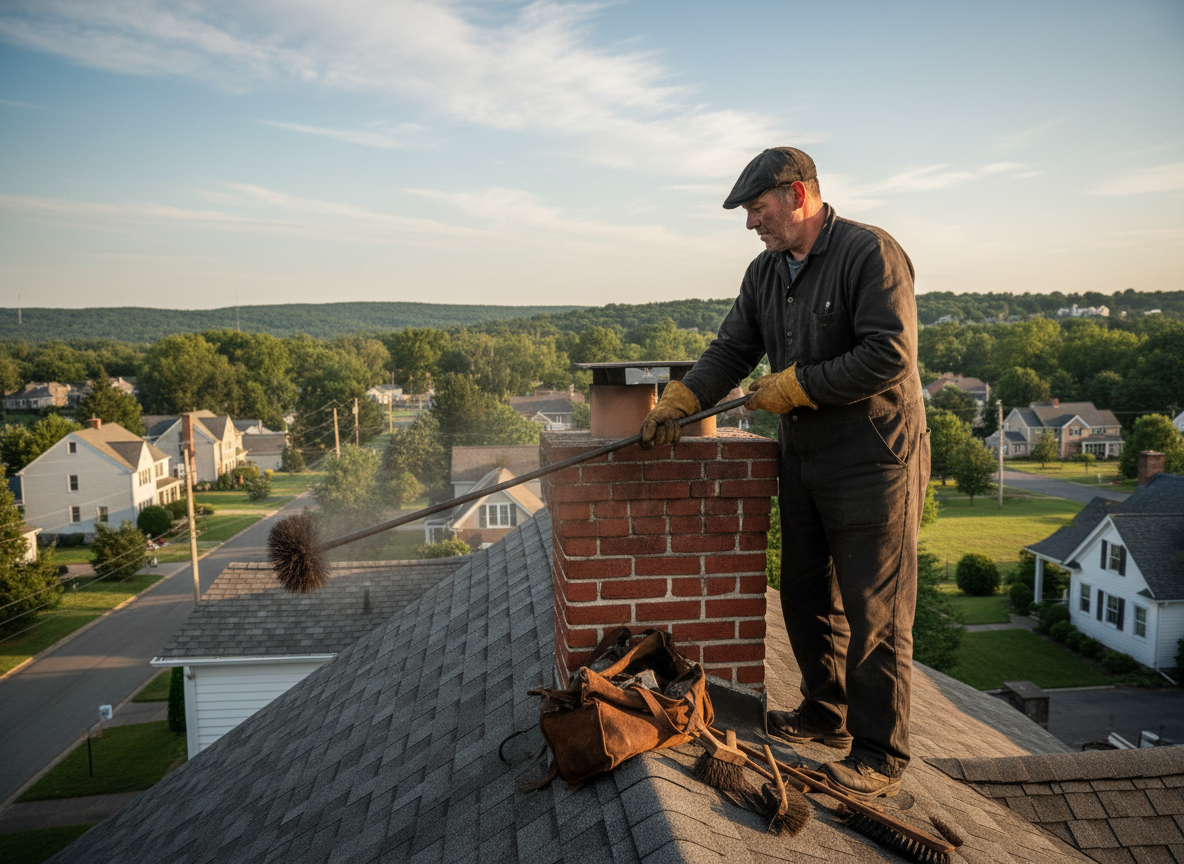
Chimney sweeps in Parsippany-Troy Hills address creosote accumulation that builds quickly when homeowners burn seasoned hardwood through the long Morris County winters. Older masonry chimneys common in neighborhoods like Lake Hiawatha and Troy Hills often feature narrow flues that trap tar-like deposits faster than modern lined systems. A single missed sweep can allow Stage 3 creosote to form, raising the risk of chimney fires when temperatures drop below freezing and draft reverses.
Freeze-thaw cycles in northern New Jersey loosen mortar joints on exterior chimneys exposed to prevailing winds off the Watchung Mountains. Sweep technicians check for hairline cracks at the crown and flashing where water enters, then removes all loose material before it migrates into the smoke chamber. Homeowners along Route 46 frequently report downdraft issues after heavy snow loads; brushing and vacuuming restores proper draw without requiring full rebuilds.
Edge cases include shared flues in duplexes near Waterview Boulevard where one unit’s oil furnace residue mixes with the other’s wood smoke, creating acidic deposits that corrode clay tiles. Technicians always verify damper operation and install temporary covers during the job to keep soot out of living spaces. Post-sweep inspection includes a mirror and light check of the smoke shelf to confirm no obstructions remain before the next cold snap.
Technician insight
In Parsippany-Troy Hills, the thing that catches most people out with chimney sweep is how quickly creosote hardens in the narrow flues of 1970s brick chimneys once overnight lows hit the teens; homeowners wait until the first smoke backup instead of scheduling before the first hard freeze.
Heavy Creosote in Lake Hiawatha Colonial
Homeowner in a 1978 brick colonial reported sluggish draft and occasional smoke in the living room after burning oak for two weeks. Inspection revealed Stage 2 creosote coating the entire flue. The sweep removed the buildup, cleared the smoke shelf, and confirmed the clay liner remained intact. Draft returned to normal and no further issues occurred through the rest of the winter.
How it works
- 1
Initial Inspection
Technician examines the flue, crown, and damper from the roof and fireplace opening to identify creosote levels and any structural concerns.
- 2
Mechanical Sweeping
Rotary brushes sized to the flue diameter remove creosote and soot while a HEPA vacuum captures debris at the base.
- 3
Debris Removal and Cleanup
All material is extracted from the smoke chamber and fireplace, followed by vacuuming of the hearth area.
- 4
Final Verification
Mirror and light inspection confirms clear passage, damper function, and no remaining obstructions before departure.
Pricing
Pricing based on chimney height, flue size, and creosote stage; call for on-site quote.