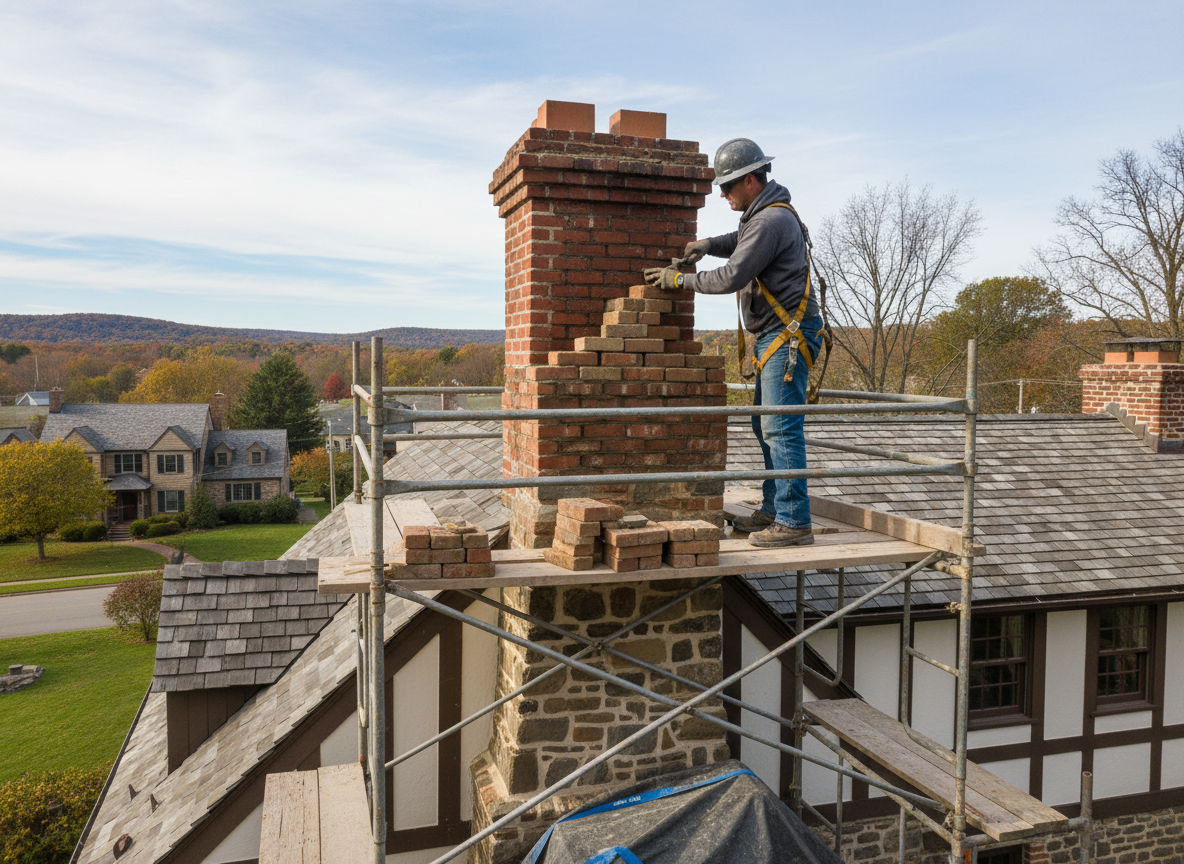
Chimney restoration in Parsippany-Troy Hills often involves older brick structures common in homes built during the 1960s through 1980s around areas like Waterview Boulevard and nearby subdivisions. Freeze-thaw cycles during New Jersey winters cause mortar to crack and bricks to spall, allowing water intrusion that can damage the flue liner and interior framing. Restoration typically starts with a full inspection to identify hidden issues such as creosote buildup or shifting due to soil movement in the local clay-heavy terrain, then proceeds to tuckpointing, crown rebuilding, and stainless steel liner installation where needed.
Homeowners in Parsippany-Troy Hills frequently encounter edge cases like chimneys serving multiple appliances or those integrated with cedar shake roofs that complicate access and flashing details. Materials must match existing masonry to maintain structural integrity and meet Morris County building codes on draft performance and spark arrestors. Skipping proper waterproofing during restoration leads to recurring leaks that affect ceilings and insulation, especially after heavy spring rains common in the region.
Restoration work here also accounts for the prevalence of two-story colonials and split-levels where chimney height and wind exposure increase draft problems. Technicians focus on sealing joints against ice dams that form along the roofline in winter, using high-temperature refractory cement and custom-fabricated caps. This approach prevents carbon monoxide risks and extends the life of the entire system without full demolition.
Technician insight
In Parsippany-Troy Hills, the thing that catches most people out with chimney restoration is how quickly freeze-thaw damage spreads through the soft mortar in 1970s brick chimneys once water gets behind the crown, especially on homes near Waterview Blvd where wind-driven snow piles up on the north side.
Split-Level Chimney Leak Repair
Water stains appeared on the second-floor ceiling after a heavy snowmelt. Inspection revealed cracked crown and deteriorated flue liner in a 1978 split-level off Route 46. Crew rebuilt the crown, installed a new stainless liner, and sealed all joints. The leaks stopped and draft improved for the wood stove.
How it works
- 1
Initial Inspection
Technician examines the chimney exterior, flue, and surrounding roof structure for cracks, spalling, and water damage specific to Parsippany-Troy Hills weather exposure.
- 2
Damage Assessment
Detailed evaluation of mortar joints, crown, and liner condition to determine scope, including any effects from local soil settling or freeze cycles.
- 3
Repair Execution
Tuckpointing, brick replacement, crown rebuilding, and liner work performed with materials suited to the home's age and existing construction.
- 4
Final Sealing and Testing
Waterproofing applied and draft tested to confirm performance under typical Morris County winter conditions before completion.
Pricing
Restoration costs depend on chimney height, extent of brick and liner damage, and whether multiple flues are involved.