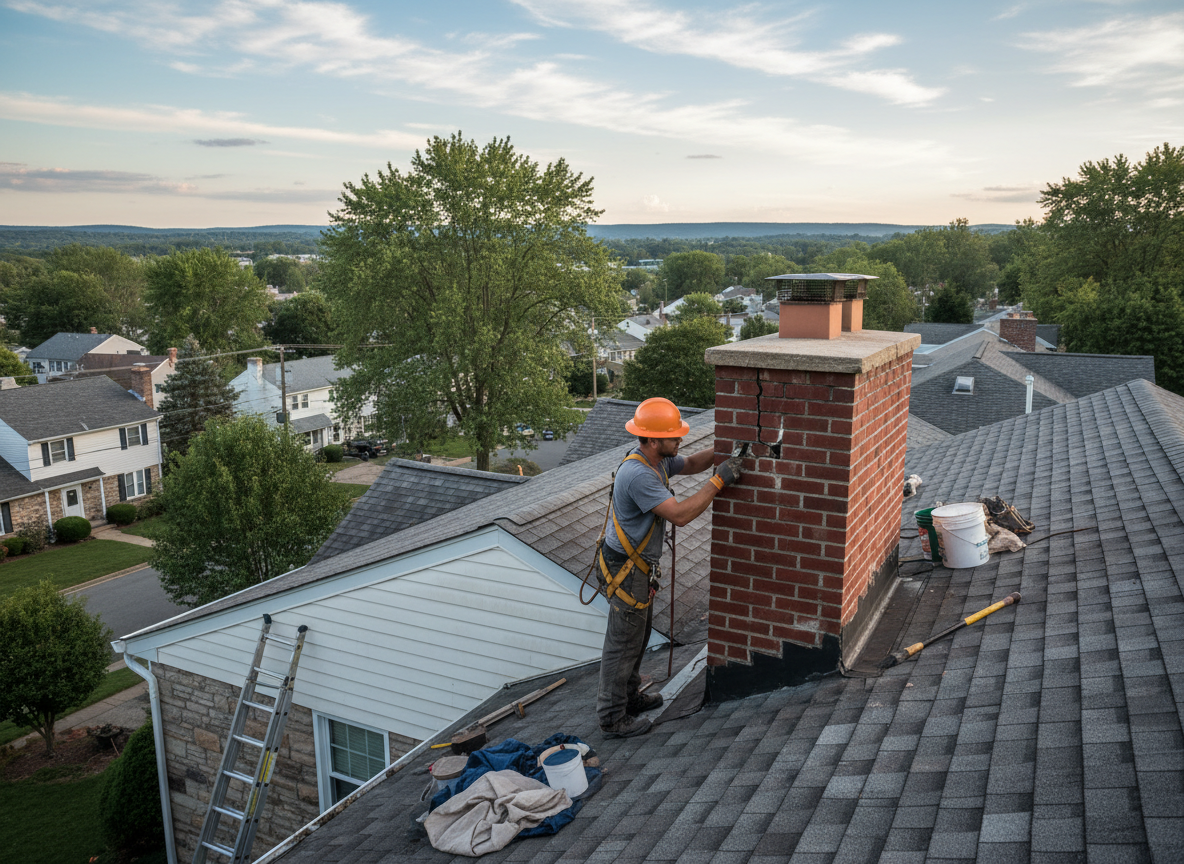
Chimney leaks in Parsippany-Troy Hills often start at the crown or flashing where repeated freeze-thaw cycles from Morris County winters crack masonry and allow water into the flue. Older brick chimneys common in the area’s post-war housing stock are especially prone once the original mortar begins to erode. We inspect the full stack from roofline to firebox, checking for water staining on interior walls and deteriorated clay flue liners that can worsen during heavy spring rains.
Repair work here frequently involves rebuilding or sealing the chimney crown with a proper slope and installing new step flashing that integrates with existing asphalt shingles. In neighborhoods like those near Waterview Boulevard, we also address chase covers that have rusted through after years of exposure. Every job includes removal of loose debris and verification that the damper still operates correctly once the leak path is closed.
Homeowners sometimes mistake interior drywall stains for roof leaks when the real source is a failed chimney cap or cracked flue tile. We always confirm the water path with a controlled water test before any masonry work begins. This prevents unnecessary roof repairs and keeps the fix focused on the chimney structure itself.
Technician insight
In Parsippany-Troy Hills, the thing that catches most people out with chimney leak repair is how quickly the freeze-thaw cycles on older brick stacks turn a small crown crack into water running down the flue and staining ceilings two stories below. Many homes here still have the original 1960s-70s construction where the flashing was never properly integrated with the roof plane, so the leak always shows up inside first.
Lake Hiawatha Chimney Leak
Water stains appeared on the second-floor ceiling after a March rain. Inspection showed deteriorated crown mortar and rusted step flashing on a 1970s brick chimney. We rebuilt the crown with a sloped wash, replaced the flashing, and sealed the flue collar. The homeowner reported no further leaks after the next heavy rain.
How it works
- 1
Initial Inspection
We examine the crown, flashing, and flue from both roof and interior access points to locate active leak paths.
- 2
Water Testing
Controlled water is applied to verify the exact entry points before any repair materials are ordered.
- 3
Repair Execution
Crown rebuild, flashing replacement, or liner sealing is completed with materials matched to the existing chimney construction.
- 4
Final Verification
A second water test confirms the leak is resolved and the system is left clean and operational.
Pricing
Upfront quotes provided after on-site inspection; cost varies with chimney height, extent of masonry damage, and whether flue liner work is required.