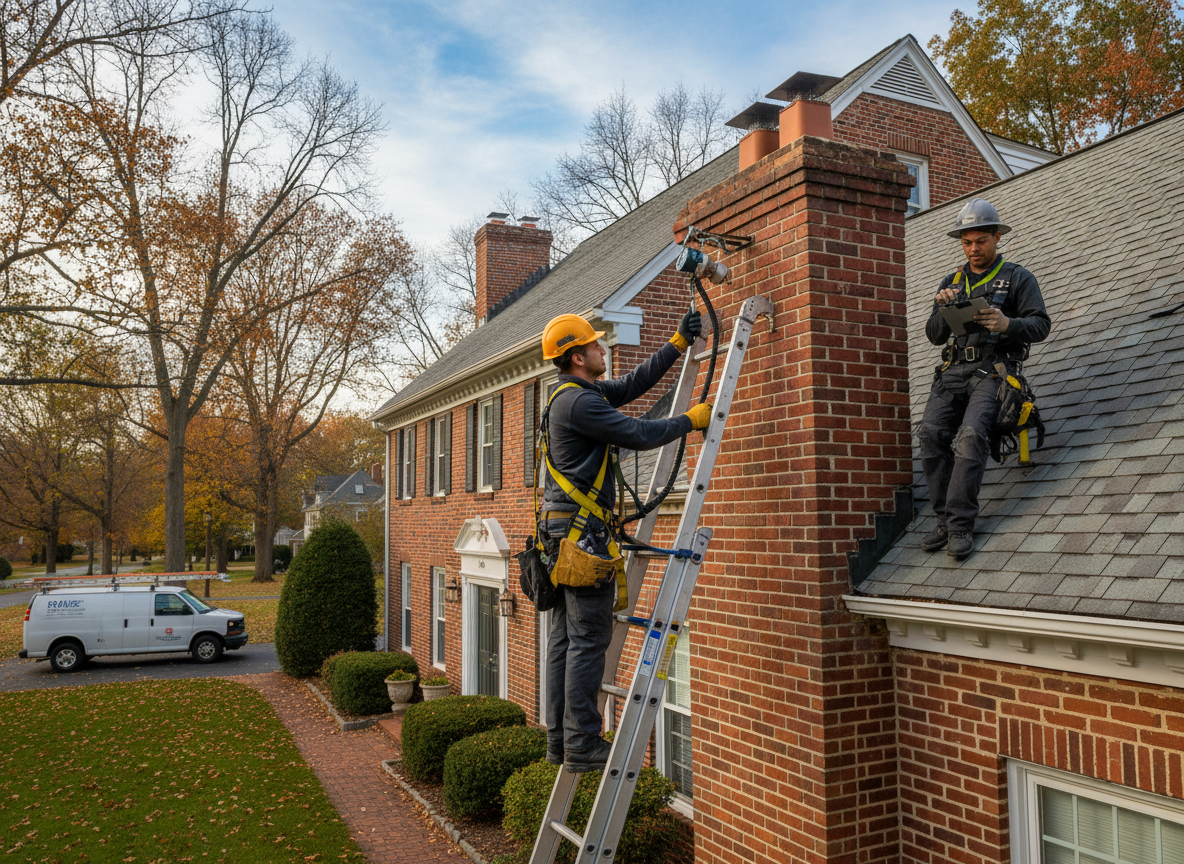
Chimney inspection service in Parsippany-Troy Hills begins with a full exterior and interior check of masonry and flue liners. Homes here often date from the 1960s through 1980s with original brick stacks that settle on the area's clay-heavy soil, creating hairline cracks at the roofline and crown. Inspectors look for spalling bricks, missing mortar, and creosote buildup that accelerates in cold Morris County winters when wood-burning appliances run daily.
Interior access matters because many split-level and ranch homes in Lake Hiawatha and Mount Tabor have limited attic space around the chimney chase. We check for proper clearances to wood framing, confirm the flue is lined where gas logs or inserts are present, and verify the damper operates without binding. Water intrusion from flat roof transitions common on these properties shows up as rust on the smoke chamber or damaged flue tile.
Code notes for Morris County require that any inspection after a chimney fire or before selling a home documents liner condition and spark arrestor integrity. We flag when a clay flue needs a stainless steel liner retrofit because unlined chimneys in this climate allow rapid acid deterioration once temperatures swing below freezing.
Seasonal Considerations
Winter freeze-thaw cycles in Parsippany-Troy Hills push moisture into existing cracks, so inspections before November catch issues before ice damage widens them. Spring checks after heavy rain reveal leaks that only appear when snow melts and roof valleys drain.
Technician insight
In Parsippany-Troy Hills the thing that catches most people out with chimney inspection service is how many 1970s split-levels have the chimney boxed inside a finished attic wall with no access panel. Once we open it up we often find the flue has shifted because the house settled on the clay soil near Waterview Boulevard while the brick stack stayed put.
Hidden Flue Shift in Mount Tabor Ranch
Homeowner called after noticing faint water stains on the family room ceiling below the chimney. We found the flue had shifted two inches at the attic level due to soil movement common in that section of Mount Tabor. Installed a stainless liner and sealed the crown to stop further water entry.
How it works
- 1
Schedule and Access Review
Confirm property details and schedule a time that works with 24/7 availability from the Waterview Blvd location.
- 2
Exterior Assessment
Examine crown, flashing, and brickwork from the roof and ground for settling common on local clay soils.
- 3
Flue and Liner Inspection
Use camera or visual checks inside the flue to identify creosote, cracks, or missing liner sections.
- 4
Report and Recommendations
Provide written findings with photos and note any immediate safety concerns before leaving the site.
Pricing
Pricing depends on chimney height, number of flues, and roof access; call for an upfront quote.