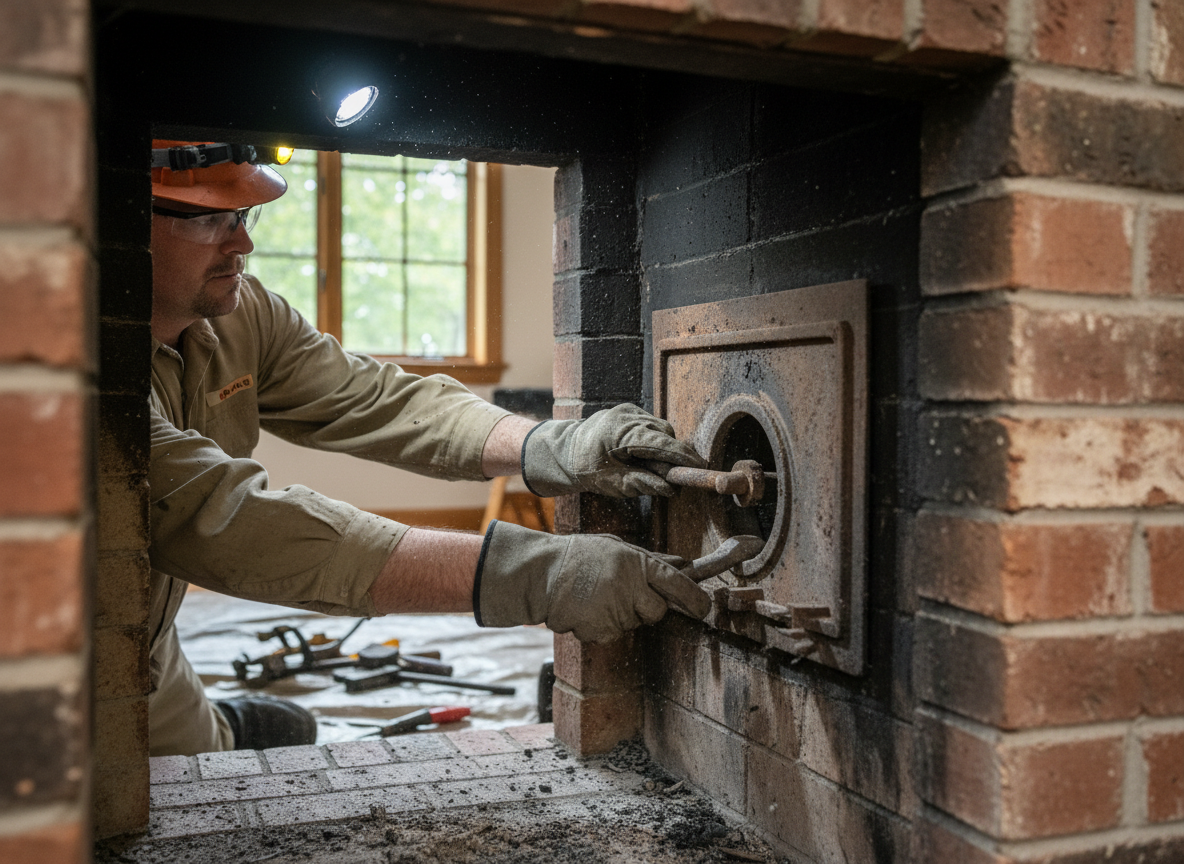
Parsippany-Troy Hills homes built from the 1950s through the 1970s often feature masonry chimneys with cast-iron or steel throat dampers that corrode after decades of exposure to road salt spray and repeated freeze-thaw cycles. Moisture enters through hairline cracks in the flue tile, freezes, and expands the metal plate until it no longer seats or pivots. Technicians at Revivon Works first drop a camera from the roof to confirm the damper type and any flue damage before deciding whether to free the existing unit or install a stainless-steel replacement that resists local winter conditions.
Repair begins with removal of creosote and debris that accumulate on the damper seat. In many Troy Hills split-levels the chimney chase is tight, so we work from the roof with specialized long-handled tools rather than cutting into finished ceilings. When the original damper has seized in the closed position we may install a top-sealing damper that also reduces downdrafts common on the exposed ridges near Waterview Boulevard. All work follows current IRC fireplace and chimney requirements for damper operation and spark arrestor clearance.
Homeowners frequently notice smoke spillage on windy days or difficulty starting fires once the damper plate warps. We always test the new or repaired damper from both the firebox and roof to confirm full open and closed positions before leaving the site. Because many Parsippany chimneys share walls with finished rooms, we protect flooring and use drop cloths throughout the process.
Technician insight
In Parsippany-Troy Hills, the thing that catches most people out with chimney damper repair is how quickly older brick chimneys built on the flat sections near Lake Hiawatha collect moisture that freezes and locks the plate; the damper looks fine from the living room but is already warped by the time we reach it from the roof.
Warped Damper on Waterview Boulevard Chimney
Homeowner in a 1960s ranch reported smoke entering the room on windy days. Camera inspection showed the cast-iron damper warped and pitted from years of freeze-thaw exposure. We removed the damaged plate through the roof, installed a stainless top-sealing unit, and confirmed full travel and tight seal before restoring normal fireplace use.
How it works
- 1
On-Site Assessment
We arrive at the Parsippany-Troy Hills address, inspect the chimney exterior and firebox, and use a camera to evaluate damper condition and flue alignment.
- 2
Access and Cleaning
Technicians clear creosote and debris from the damper seat, then determine whether the unit can be freed or must be replaced.
- 3
Repair or Replacement
Seized dampers are freed or swapped for stainless models suited to Morris County winters; linkage and handle are adjusted for smooth operation.
- 4
Final Testing
We verify full open and closed positions from roof and firebox, confirm no smoke spillage, and document the completed work.
Pricing
Pricing depends on damper material, access difficulty, and whether replacement parts are needed; we provide a written quote after inspection.