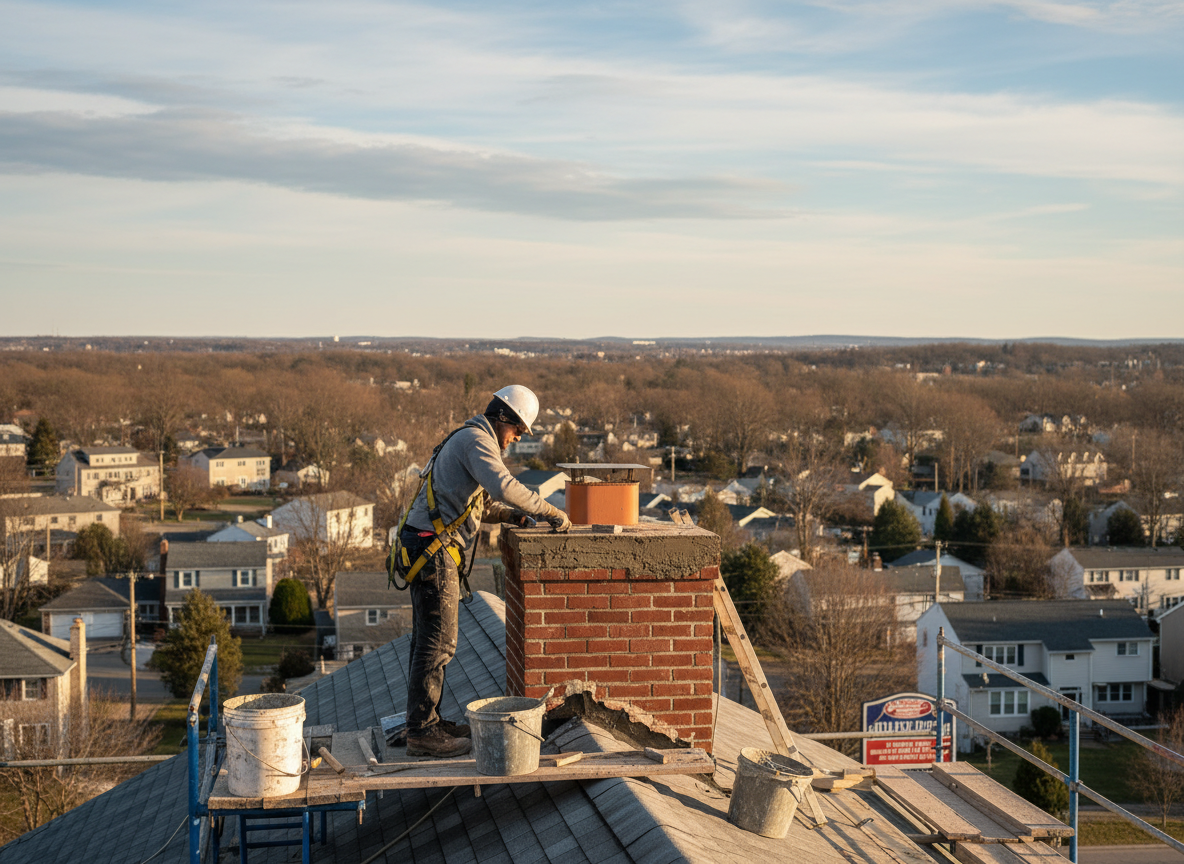
Parsippany-Troy Hills features many mid-century brick homes whose chimneys face repeated freeze-thaw damage from New Jersey winters. Mortar joints crack when water freezes, allowing water intrusion that can reach interior framing if left unchecked. Repair work here often starts with a full height inspection to locate hidden deterioration behind the crown or flue tiles before any repointing or rebuild begins.
Soil conditions around the Rockaway River watershed contribute to minor foundation shifts that tilt chimneys over decades, stressing the flashing where the chimney meets the roof. Technicians in this area routinely check for these leans during every service call because even a small tilt changes how water sheds and can void standard flashing repairs. Owner-operated crews at 35 Waterview Blvd keep materials on hand for same-day crown and cap fixes when storms are forecast.
Local building practices in Morris County favor clay flue liners in older stacks, which can spall after years of wood or oil use. Replacement requires careful removal without disturbing the surrounding brick, especially on two-story homes common in the Lake Hiawatha and Mount Tabor sections. Crews schedule these jobs during shoulder seasons to avoid the winter rush when ice dams add extra pressure on already compromised masonry.
Technician insight
In Parsippany-Troy Hills the thing that catches most people out with chimney repair is how quickly a small crown crack turns into interior water damage once the heavy snow starts melting and refreezing on these older brick stacks. Homeowners often wait until they see stains inside before calling, but by then the flashing has already lifted and the job has grown.
Tilted Chimney on a Lake Hiawatha Split-Level
A homeowner noticed water stains near the fireplace after a January thaw. Inspection revealed the chimney had shifted slightly due to repeated freeze-thaw cycles and minor soil movement common near the Rockaway River. We rebuilt the crown, repointed the upper courses, and reset the flashing to restore proper drainage without a full rebuild.
How it works
- 1
Initial Inspection
Technician climbs and examines the full chimney stack, crown, flue, and flashing for cracks, spalling, and water paths common in Parsippany-Troy Hills brick homes.
- 2
Diagnosis and Quote
Findings are reviewed on site with the homeowner, including photos of damaged mortar or shifted flue tiles, followed by a written scope and timeline.
- 3
Repair Execution
Masonry work proceeds with appropriate mortar mixes, new flue sections if needed, and proper flashing integration to handle local snow loads and freeze cycles.
- 4
Final Check and Cleanup
Completed repairs are tested for water tightness and the work area is cleared before departure, with 24/7 scheduling available for urgent storm damage.
Pricing
Upfront written quotes after on-site inspection; final cost depends on stack height, extent of masonry damage, and whether flue liner work is needed.