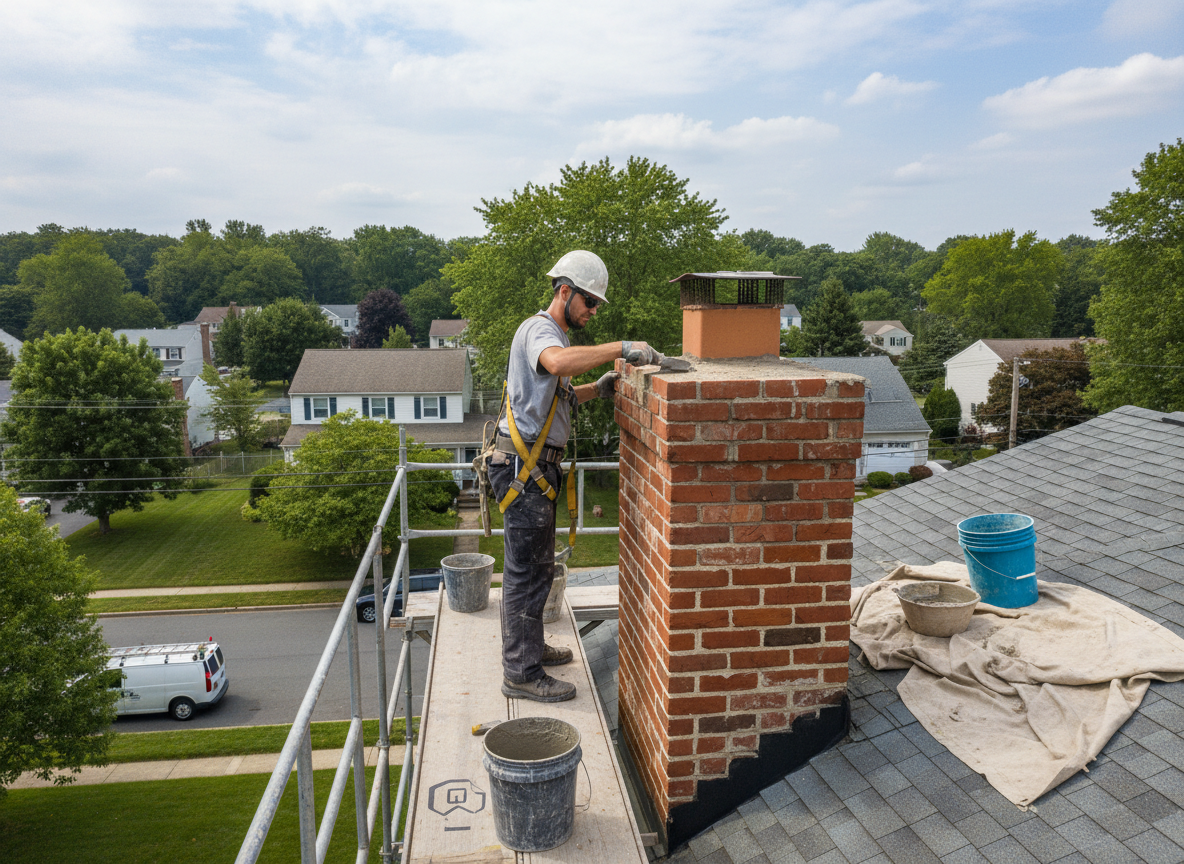
Parsippany-Troy Hills sits in Morris County where winter freeze-thaw cycles repeatedly stress brick chimneys on split-level and colonial homes built from the 1960s onward. Water enters through hairline cracks in the crown or flue tiles, then expands when temperatures swing from below freezing to the 40s within a day. Homeowners along routes like Route 46 or near Lake Parsippany often see staining on interior walls once the ice melts and moisture migrates inward.
Repairs here focus on matching the original masonry while adding proper flashing at the roofline to handle the area's heavy spring rains and occasional nor'easters. Technicians at 35 Waterview Blvd keep common replacement crowns, clay flue liners, and stainless caps on hand because many two-story homes in the Troy Hills section have limited attic access that makes full liner swaps time-consuming. Skipping the step of sealing the crown after tuck-pointing lets water re-enter the next freeze cycle and undoes the work within two seasons.
Local code requires permits for any structural chimney work that affects the firebox or flue, so crews coordinate with the Parsippany building department before starting. Older chimneys near the Rockaway River floodplain also sit on slightly shifting soil, which can tilt the chase and create additional stress points at the roof penetration. Addressing both the visible crown damage and the hidden offset prevents repeat calls after the first heavy snowfall.
Technician insight
In Parsippany-Troy Hills the thing that catches most people out with affordable chimney repair is how the freeze-thaw cycles along the Rockaway River corridor crack crowns on 1970s brick chimneys faster than in drier parts of Morris County, so a quick patch without sealing the entire top lets water back in by the next cold snap.
Water Stains After Early Freeze
Homeowner in the Troy Hills section noticed ceiling stains after the first hard freeze. Inspection showed a cracked crown letting meltwater run down the flue. Crew rebuilt the crown with proper slope, added new flashing, and sealed the top. No further staining appeared after subsequent storms.
How it works
- 1
On-Site Inspection
Technician examines the crown, flue, flashing, and interior chase for water entry points common in Morris County homes.
- 2
Damage Assessment
Report details which repairs fall under affordable fixes versus full rebuilds based on brick condition and roof access.
- 3
Targeted Repair
Work includes crown rebuilding, tuck-pointing, or cap replacement using materials suited to local freeze-thaw exposure.
- 4
Final Check and Seal
Crew verifies water-tightness and leaves the site clean before the next weather system arrives.
Pricing
Upfront quote after inspection; cost driven by crown condition, liner access, and whether flashing must be replaced.